


Over the past few decades, composite materials manufacturing has undergone a long transition from experience-driven production to data-driven operations. Production once relied on skilled craftsmen, planning depended on Excel spreadsheets, and scheduling followed fixed weekly or monthly cycles. Any change in orders could disrupt equipment operation, often putting entire production lines into a passive state.
Later, digitalization gradually entered the scene: APS (Advanced Planning and Scheduling) systems, MES (Manufacturing Execution Systems) as data hubs, SPC (Statistical Process Control), and material tracking via barcodes and RFID. ERP and MES systems began to integrate, enabling quality traceability from batch level down to individual items. However, these systems were still connected through human intervention, and decision-making remained largely manual, with clear efficiency bottlenecks. It was not until the real introduction of AI that composite manufacturing began to experience a fundamental transformation.
Production scheduling: from weekly delays to minute-level dynamic closed-loop optimization.
Traditional planning and scheduling are slow, lagging, and difficult to adjust, making them unable to effectively respond to unexpected disruptions.
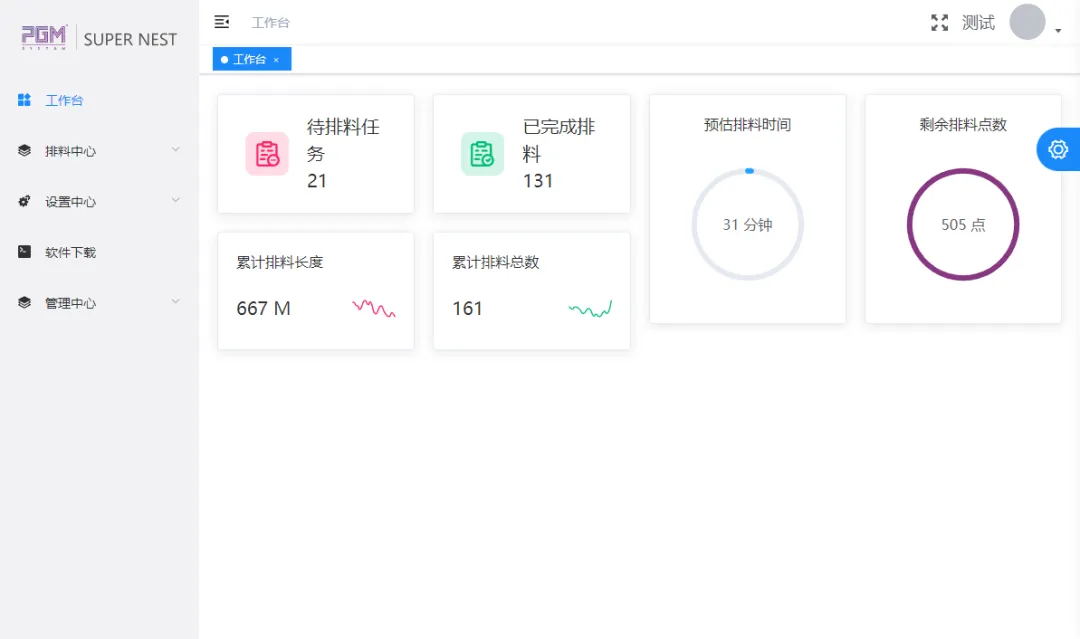
PGM Super Nest intelligent nesting system, powered by AI, fundamentally reshapes the production rhythm:
Real-time response to shop-floor changes, automatically generating, updating, and optimizing production schedules
Multi-scenario simulation, quickly delivering optimal solutions under complex constraints
Drastically reduced gap between planning and execution to a minute-level response, enabling flexible handling of rush orders, order changes, and equipment disruptions
Intelligent nesting optimization significantly improves both material utilization and cutting efficiency
Process Quality Inspection: From Post-Process Correction to Full-Process Adaptive Prediction
AI enables process control to enter an adaptive era, fully shifting quality management upstream:
Dynamically adjusts process parameters based on real-time sensor data to ensure stable product quality
Computer vision is applied to ply positioning and surface defect detection, enabling high-precision and highly efficient inspection.
Quality prediction shifts from post-process inspection to in-process forecasting, significantly reducing scrap and rework.
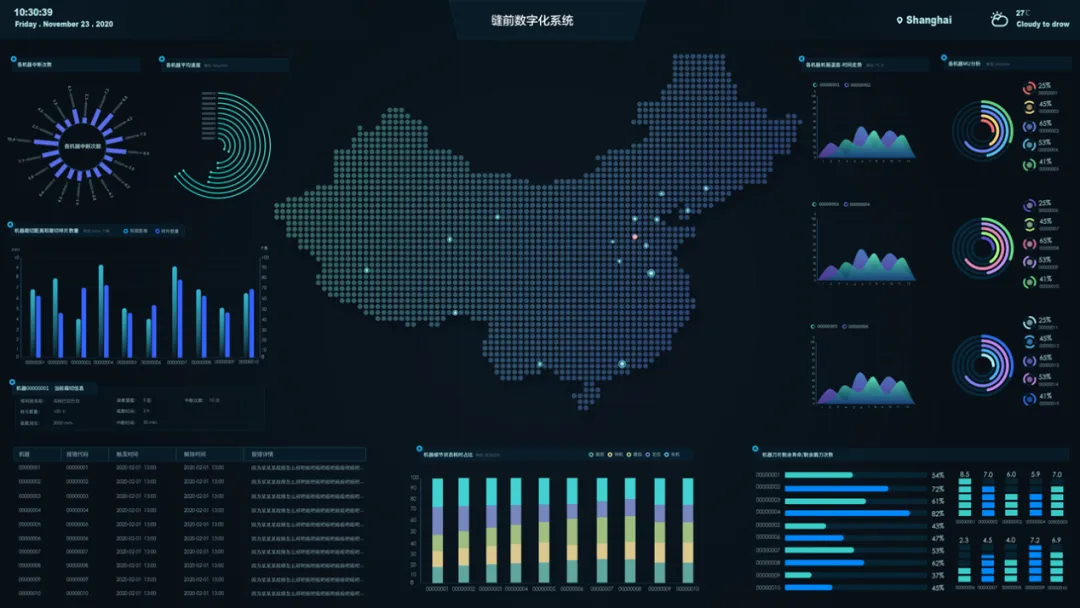
Materials & Equipment: Visible Cost Reduction, Efficiency Gains, and Precision Operations
AI-driven demand forecasting and dynamic optimization of inventory strategies.
End-to-end digital tracking ensures transparent and controllable material flow throughout the entire process.
Systematic control of waste and offcuts, significantly improving material utilization rates.
Real-time visibility of equipment health status, with predictive maintenance reducing unplanned downtime.
Intelligent scheduling of high-energy-consuming equipment significantly optimizes energy consumption.
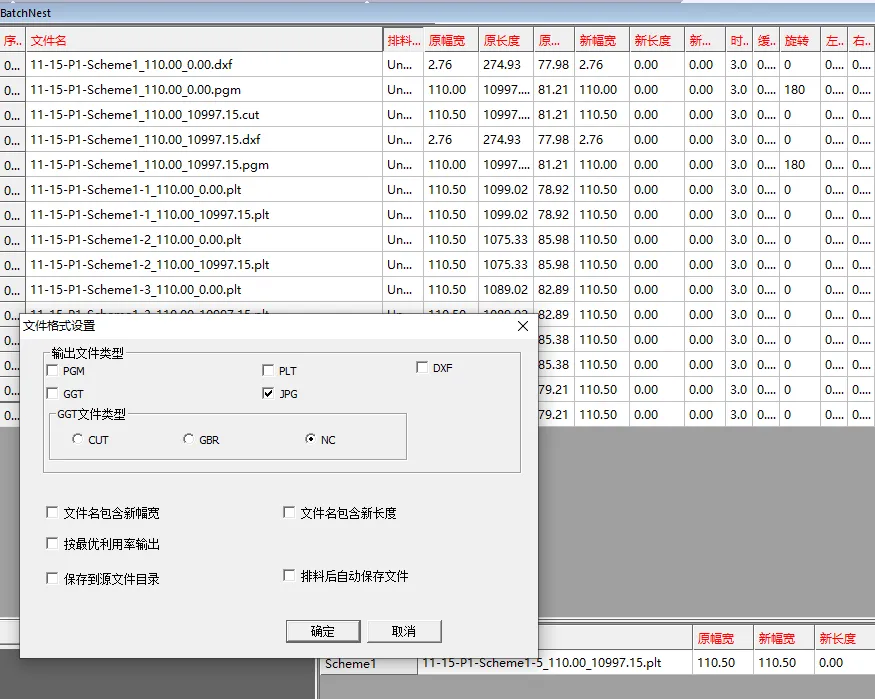
PGM centers on cutting systems, empowering intelligent manufacturing through integrated hardware and software solutions.
As a high-tech enterprise specializing in cutting equipment, software and hardware R&D, and integrated supporting services, PGM has always been at the forefront of intelligent manufacturing for composite materials:
We do not just provide a single cutting machine, but a complete cutting solution powered by AI, digitalization, and automation:
PGM Super Nest Intelligent Scheduling System
High-precision automatic cutting
Full-process data traceability
Industry 4.0-level production line efficiency optimization
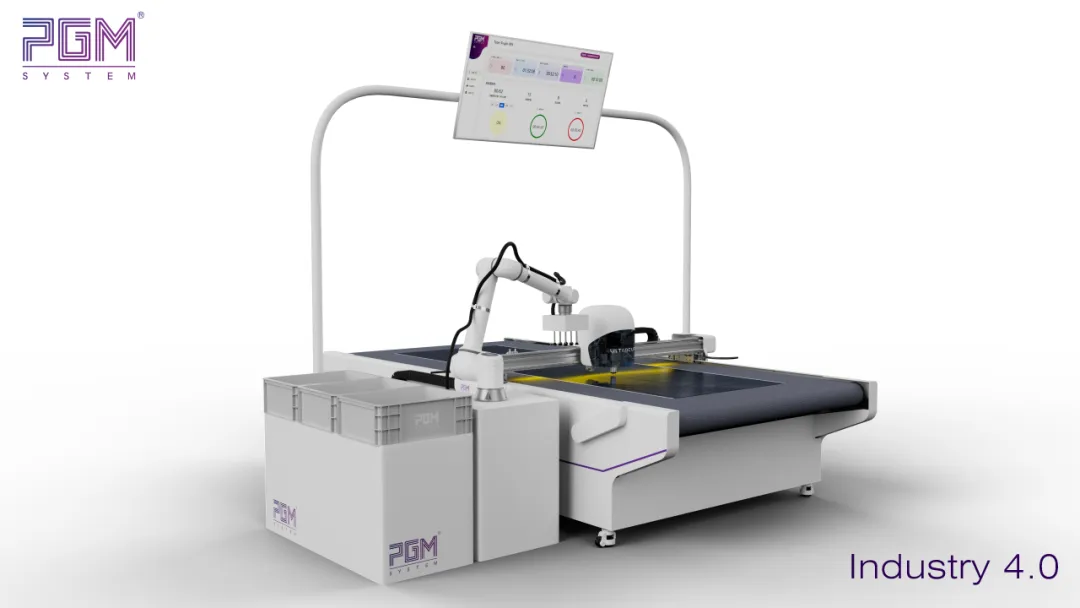
From relying on experienced craftsmen to trusting the judgment of algorithms and data, composite materials manufacturing is undergoing a true revolution.
Higher efficiency, less waste, and greater resilience—PGM works with you to pave the way toward intelligent manufacturing ahead of time.